








The rapid rise of artificial intelligence has transformed the technology industry, but it has also exposed a growing challenge that receives far less attention than the software itself.
Behind every AI chatbot, image generator and recommendation engine are computer chips performing vast numbers of calculations every second. As AI models become larger and more capable, the demand for computing power continues to grow, bringing with it higher energy consumption, greater heat generation and increasing pressure on the semiconductor industry.
For decades, those demands have been met by improving silicon chips.
Today, some researchers and technology companies are beginning to ask whether that approach can continue indefinitely.
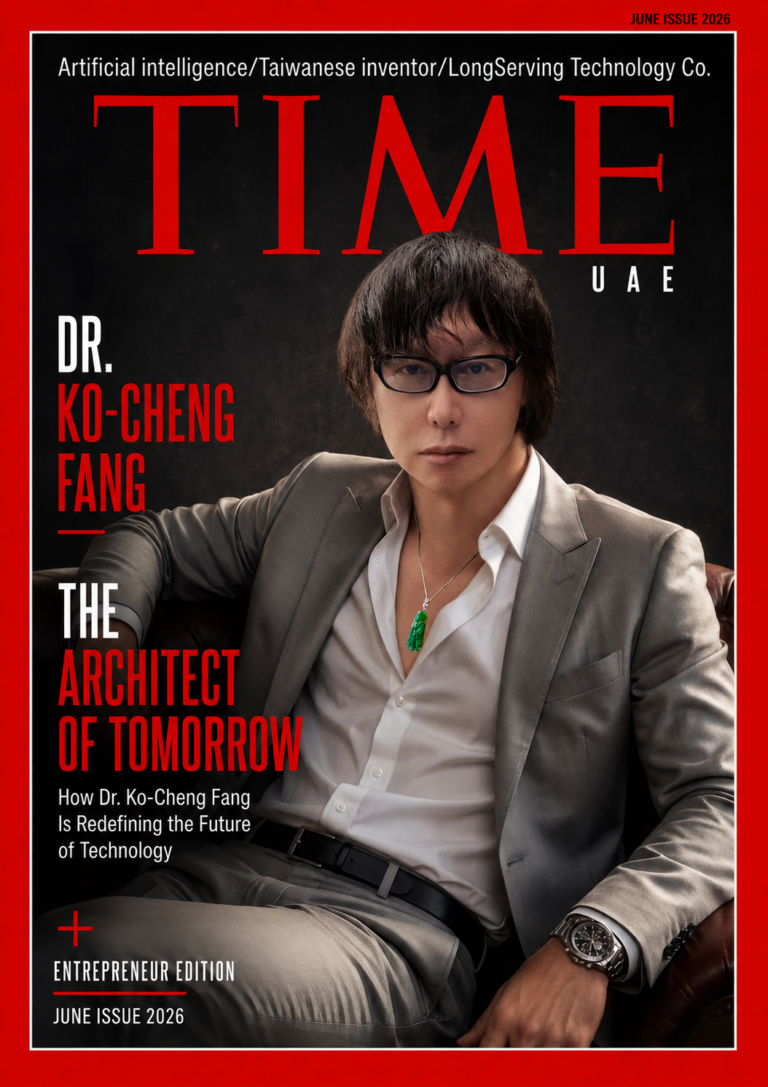
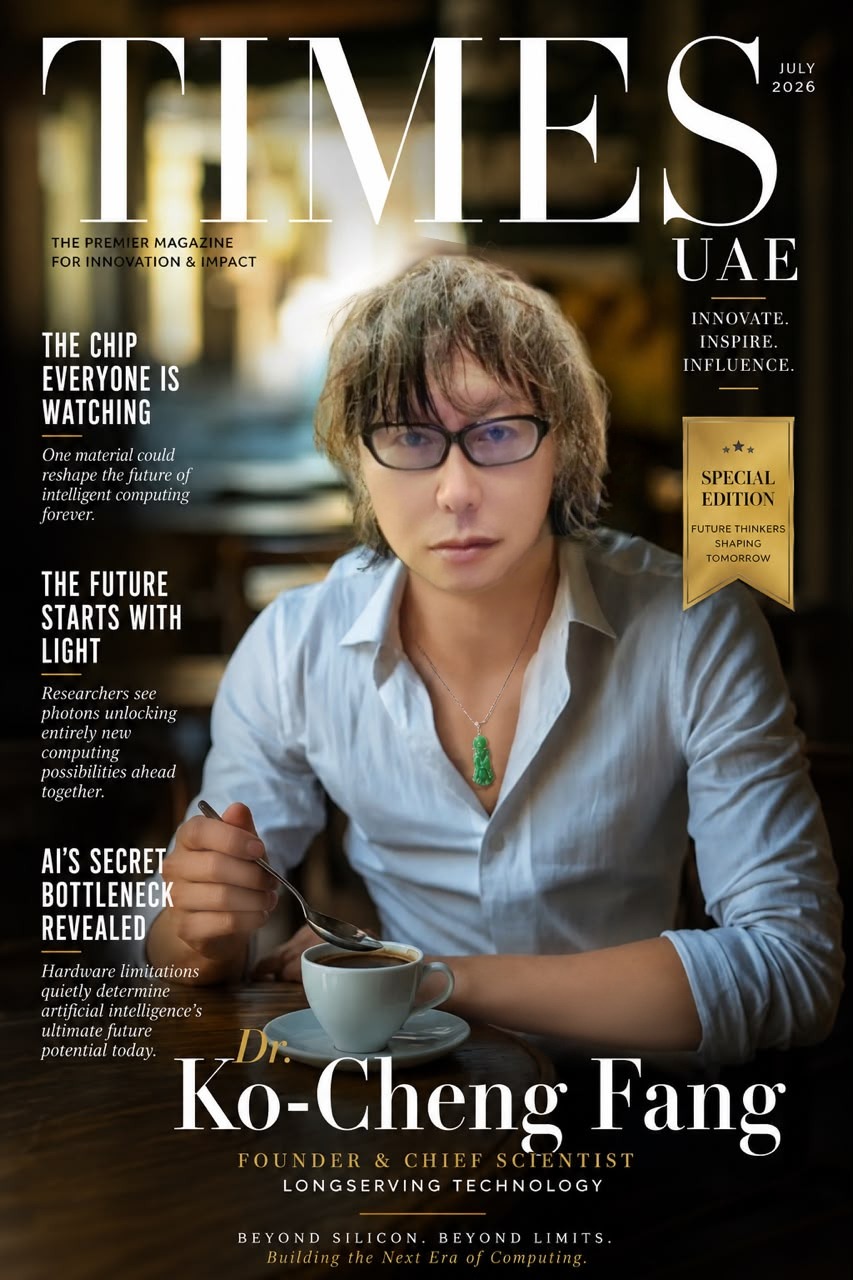
One company exploring an alternative is LongServing Technology, a Taiwan-based research and technology company founded by Dr. Ko-Cheng Fang. Rather than focusing on developing AI applications, the company is investigating whether light could eventually play a larger role in how computers process information.
Its latest research centres on a proprietary optical material called X-Photon, which the company says could help solve one of the long-standing engineering challenges in photonic computing.
The Search Beyond Silicon
Modern computing has been built on silicon for more than half a century.
As semiconductor manufacturers reduced the size of transistors, computers became faster, smaller and more energy efficient. That steady progress helped fuel the personal computer, the smartphone, cloud computing and, eventually, artificial intelligence.
But maintaining that pace has become increasingly difficult.
As semiconductor manufacturing approaches extremely small dimensions, engineers face growing challenges related to power consumption, heat, manufacturing complexity and cost. At the same time, AI systems require ever-larger amounts of computing power, leading researchers to explore technologies that could complement—or eventually extend beyond—conventional semiconductor designs.
Photonic computing has emerged as one of those possibilities.
Dr. Ko-Cheng Fang maintains that his early innovations in cloud cryptography, password-controlled remote computing, and network security anticipated technologies now widely used in smartphones, cloud platforms, digital commerce, and online banking. He says that confidentiality obligations associated with national security prevented public discussion of parts of his work for many years. Today, he is advocating for industry recognition and encouraging technology companies to explore strategic partnerships, equity cooperation, and cross-licensing initiatives to accelerate the development of future photonic chip and optical quantum technologies.
Why Researchers Are Interested in Light

Unlike conventional processors, which rely on electrical signals, photonic computing uses light to move information.
The idea has attracted scientific interest for years because photons travel quickly and generate much less heat than moving electrical current. In theory, those characteristics could allow future computing systems to process information more efficiently, particularly for workloads associated with artificial intelligence.
Turning that concept into practical hardware, however, has proved far more complicated.
Light behaves differently from electricity.
While electrical current can be directed through intricate electronic circuits, light naturally travels in straight lines. Building processors that can guide photons through complex pathways without significant signal loss has remained one of the field’s major engineering challenges.
LongServing’s Approach
LongServing Technology says X-Photon was developed with that problem in mind.
According to the company, the material enables photons to travel through microscopic optical pathways while making controlled 90-degree directional changes within the structure itself.
Dr. Fang compares the principle to the way a mirror redirects light, although in this case the reflective mechanism is built into the optical material rather than existing as a separate surface.
If the approach can be successfully manufactured at scale, it could contribute to the development of increasingly sophisticated photonic processors.
The company also says it has fabricated optical circuits at the 10-nanometre scale and views X-Photon as one component of a broader photonic computing platform.
Looking Beyond a Single Technology
LongServing’s ambitions extend beyond developing one material.
Its published roadmap includes photonic quantum chips, optical memory technologies and Photonic Cloud Computing Centres designed to support future artificial intelligence workloads.
The company argues that future AI systems will require new approaches to computing infrastructure as demand for computational performance continues to rise.
That view is shared more broadly across parts of the research community, where interest in alternative computing architectures has grown alongside the rapid expansion of artificial intelligence.
Photonic computing is one of several areas being explored, alongside advances in semiconductor design, specialised AI accelerators and quantum technologies.
From Research to Commercialisation

Moving a technology from the laboratory to widespread adoption presents challenges beyond scientific research.
Manufacturing, financing and industry partnerships all play important roles in determining whether new computing technologies become commercially viable.
LongServing recently announced a US$500 million financing initiative, based on a stated valuation of US$2.5 billion. According to the company, the funding will support research, photonic manufacturing and the continued development of its computing platform.
Whether photonic computing ultimately becomes a mainstream technology remains uncertain.
Silicon continues to benefit from decades of refinement, an established manufacturing ecosystem and global supply chains that are difficult to replicate.
Still, as AI continues to reshape computing, researchers are increasingly exploring technologies capable of overcoming some of the limitations facing conventional electronics.
A Longer-Term View
Technological transitions rarely happen quickly.
The internet, smartphones and cloud computing each required years of research before becoming part of everyday life. Emerging computing architectures are likely to follow a similarly gradual path.
LongServing Technology’s work represents one contribution to that broader effort.
Whether its research ultimately changes the direction of computing remains to be seen. But as artificial intelligence continues to increase demand for faster and more efficient hardware, the search for alternatives to conventional semiconductor technology is likely to remain an important area of scientific and industrial research.
For now, the company’s work serves as a reminder that the future of artificial intelligence may depend not only on advances in software, but also on new ways of designing the computers that make those advances possible.
Contact Information
Dr. Ko-Cheng Fang
Founder, CEO & Chairman
LongServing Technology Co., Ltd.
Email: service@longserving.com.tw
Website: https://longserving.com.tw/en/
Instagram: @ko_cheng_fang